What we do
Four ways to move your freight.
Dry van is our core business. LTL, crossdocking and cross-border service sit alongside it, so one carrier can cover the whole lane.
01 — Dry Van
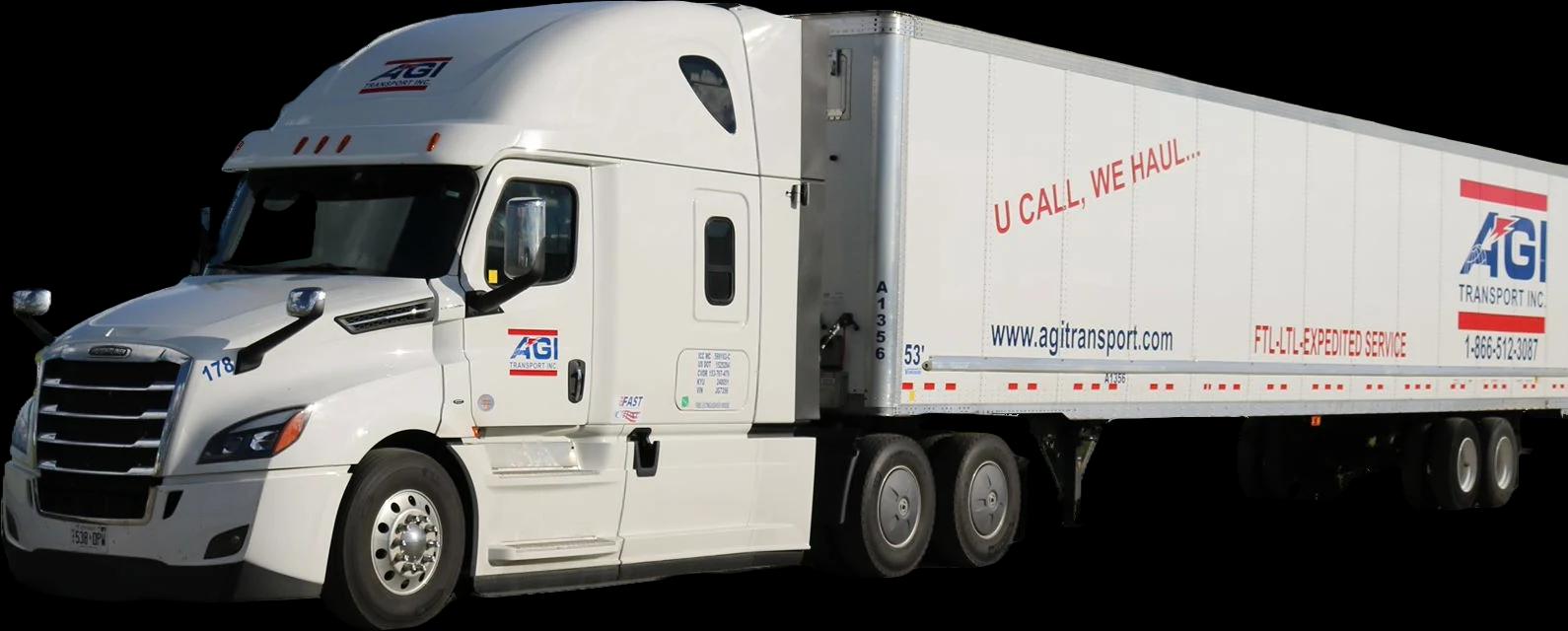
Dry Van Truckload
Full truckload and expedited dry van freight on 53-foot trailers.
A dry van is an enclosed trailer that keeps freight clear of weather and road debris, and it's the standard choice for palletised and boxed goods. A 53-foot trailer typically holds 26 standard pallets, so most truckloads are a simple fit. Tell us the pickup, the delivery, the pallet count and the weight, and we'll quote it.
- 53′ dry van trailers
- Full truckload and expedited service
- Real-time tracking through Samsara and FourKites
- Hazmat certified: ask us about regulated loads
Illustration: a 53′ trailer from above. A trailer this size typically holds 26 standard pallets.
02 — LTL
Less-Than-Truckload
A few pallets shouldn't mean paying for a whole trailer.
LTL means your freight shares a trailer with other shipments on the same lane, so you pay for the space you use rather than the whole van. It's the right fit when you're shipping more than a parcel but less than a truckload.
- Pay for the space your freight uses
- A good fit when a shipment doesn't fill a 53′ trailer
- Send pallet count, dimensions and weight for an accurate quote
Illustration of how crossdocking works: freight comes in on one trailer and goes out sorted onto others, without being stored.
03 — Crossdocking
Crossdocking
Freight in one door and out the other, without a stop in storage.
Crossdocking moves freight from one trailer to another, or sorts and consolidates it by destination, without putting it into storage first. It cuts handling time when a load has to change trailers or be split up before it carries on.
- Transfers between trailers
- Sorting and consolidation by destination
- Less handling than warehousing
04 — Cross-Border
Cross-Border, Canada & U.S.
The border is where freight gets complicated. Programs like these are how carriers make crossing it routine.
AGI is enrolled in C-TPAT (U.S.), PIP and CSA (Canada) and FAST (both countries), and carries Hazmat certification for regulated loads.
- Canada–U.S. and U.S.–Canada lanes
- A commercial invoice and bill of lading are the basics; your customs broker will say what else your goods need
- Carriers file an electronic manifest with customs before the truck arrives
- FAST lanes are available to eligible loads when the carrier, driver and importer are all enrolled

Customs-Trade Partnership Against Terrorism
U.S. Customs and Border Protection
U.S. Customs treats member carriers as lower-risk, which is one of the first things many brokers and shippers look for.

Free and Secure Trade
U.S. CBP and Canada Border Services Agency
When the carrier, the driver and the importer are all enrolled, eligible loads can use the FAST lane.
Partners in Protection
Canada Border Services Agency
It is the Canadian counterpart to C-TPAT, and the two programs recognise each other.
Customs Self Assessment
Canada Border Services Agency
Approved carriers can bring eligible goods into Canada with simpler, faster release.
Questions
Freight, explained.
Plain-English answers to the questions we hear most. For anything specific to your load, call the office.
What is dry van freight?
Dry van freight travels in an enclosed, non-refrigerated trailer that protects it from weather and road debris. It's typically palletised or boxed goods: consumer products, packaging, building materials and the like.
What's the difference between full truckload and LTL?
A full truckload (FTL) moves one shipper's freight on a trailer, pickup to delivery. LTL, less than truckload, combines smaller shipments from several shippers on one trailer, so you pay for the space your freight uses.
What does expedited mean?
Expedited freight is time-critical freight moved on a priority basis. If something has to be there by a deadline, say so when you ask for a quote.
How many pallets fit on a 53-foot trailer?
Typically 26 standard (48 × 40 inch) pallets, single-stacked. Weight limits apply as well as space, so send your pallet count and weight and we'll tell you how it loads.
What happens at the border?
Before the truck arrives, the carrier files an electronic manifest with customs, and the shipment's paperwork goes to your customs broker for entry. Carriers enrolled in programs like C-TPAT, PIP, CSA and FAST can use streamlined processes, including FAST lanes, for eligible loads.
Which documents do I need to ship across the border?
A commercial invoice and a bill of lading are the basics, and your customs broker will tell you what else your goods require. Ask them before the load is booked so nothing delays the crossing.
Can you haul hazardous materials?
AGI is Hazmat certified. Tell us what you're shipping and its classification when you ask for a quote, and we'll confirm it's something we can carry.
Not sure which one you need?
Tell us what you're moving and where it's going, and we'll point you at the right service.